Skills
UX DESIGN / WEB DESIGN / STRATEGY / ACCESSIBILITY / HTML + CSS
Platform
Desktop + Mobile Website (WordPress CMS)
My Role
UX Designer + Web Strategist – Led stakeholder interviews, performed an accessibility audit, gathered user feedback, and redesigned the site to better serve community members, funders, and internal team needs.
Collaboration with
RISC Stakeholders
OVERVIEW
THE PROBLEM
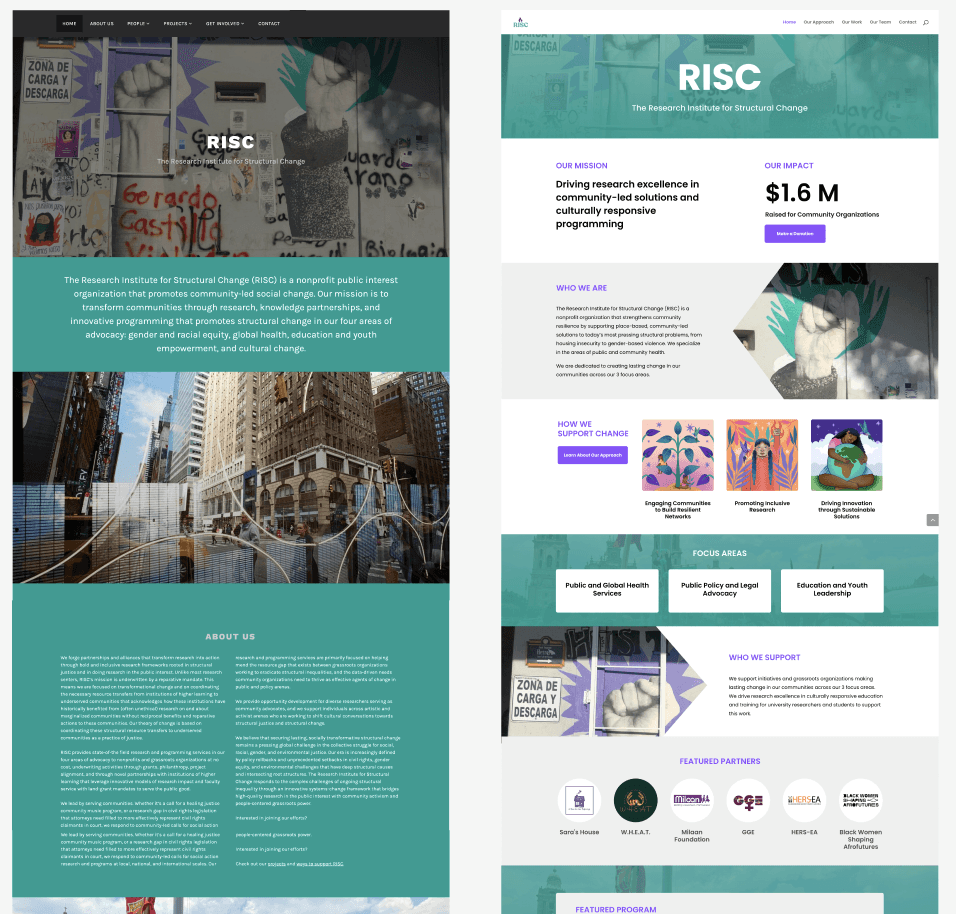
RISC’s website was outdated, text-heavy, and inaccessible. The message lacked clarity, forms were broken, and internal staff found it hard to update. These barriers prevented RISC from engaging funders, reaching new community members, and clearly communicating their value.
OUR SOLUTION
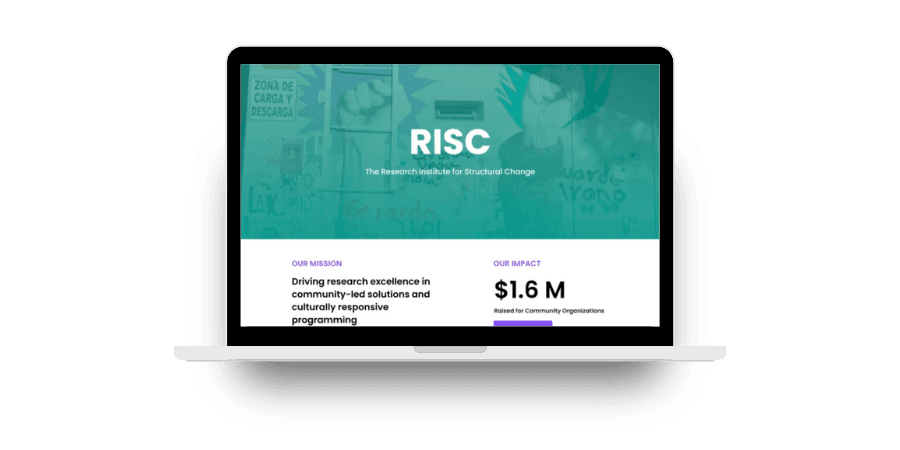
We reimagined the RISC site to be clear, visual, and easy to manage. Our goal was to create a professional yet welcoming experience that makes it easier to donate, learn, and get involved.
Key goals:
Simplify messaging so users quickly understand: What is RISC and why does it matter?
Ensure the site is accessible and usable for everyone.
Streamline content and improve visual hierarchy.
Build the new site in WordPress to empower internal updates—no code needed.
THE PROGRESS
PROCESS
DISCOVER
To align the design with real-world needs, I kicked off the project with stakeholder interviews to better understand their goals, challenges, and how they defined success for the website revamp.
Stakeholder Insights:
Clarify the mission and drive donations
The current site doesn’t effectively convey RISC’s purpose or impact. This was a missed opportunity to inspire funders and build trust.
Fix broken forms and reduce spam
Application forms were confusing and led to thousands of irrelevant submissions, creating extra work for an already small team.
Enable easy internal updates
RISC’s team wanted autonomy. They needed a user-friendly backend experience that would allow them to update content without calling in a developer.
Improve user trust through design
From broken links to confusing navigation, usability issues undermined the organization’s credibility and professionalism.
DEFINE
With insights from both stakeholders and external users, I identified key priorities to guide the redesign:
1. Streamline the content and messaging
Consolidate redundant pages
Write simplified, plain-language content
Use clear headlines and visuals to help users scan
2. Fix technical and usability issues
Enable re-CAPTCHA on forms to reduce spam messaging
Remove unused features and confusing CTAs
Audit and remove all broken links
3. Build for accessibility and inclusivity
Improve color contrast and text readability
Add descriptive alt text to all images
Avoid centered text blocks for long paragraphs of content
Fix hover states for buttons
4. Make internal updates easy
Build with reusable components in WordPress
Create a training document to help staff update content with ease
DESIGN
The new visual identity is rooted in approachability, trust, and inclusivity. We selected a clean, sans-serif typeface, softened color palette, and modular layout system to better organize information and guide users through the site.
Key design choices:
Modular layout: Allows future pages and updates to follow a clear structure
Minimal but intentional use of color: For emphasis and accessibility
Balance of visuals and text: To break up dense content and communicate their impact through visuals
Artwork with purpose: Collaborated with artists who share RISC’s mission and values, ensuring every visual element reflects themes of inclusivity, resilience, and community.
PROTOTYPE
I created mid- to high-fidelity wireframes that focused on:
Simplified homepage layout with clear calls-to-action
Modular content blocks to support easier editing and content management
Consolidated four separate forms into a single, streamlined form, making it easier for users to identify the purpose of their submission and reducing user error
Updated the main navigation menu to improve content findability and help users more effectively explore the site
Throughout prototyping, I gathered feedback to ensure the layout and structure aligned with stakeholder priorities and user expectations.
DEVELOP
With designs finalized, I built the site using a flexible WordPress theme that supports drag-and-drop content blocks:
Used semantic HTML and accessible markup
Customized styles with CSS to reflect the updated branding
Built and consolidated forms using WP forms, improving clarity and reducing user error
Created a custom backend guide to make future site updates easier for non-technical users
DELIVER
The new site successfully launched after several rounds of stakeholder testing and feedback. The final product:
Simplifies the message and helps users understand what RISC does in seconds
Improves accessibility with better contrast, layout, and alt text
Fixes broken features like forms and navigation
Empowers the RISC team to take ownership over their site going forward
REFLECT
This project reinforced how small details can have a big impact, especially for community-centered organizations. My biggest takeaway was:
Listening is the foundation of good design
From stakeholder interviews to usability feedback, every design choice came back to the same goal: serving real people with clarity and care.
ADDITIONAL RESOURCES
View the live RISC website